By Wayne Chang
See full CNN article here
What the Article Is About
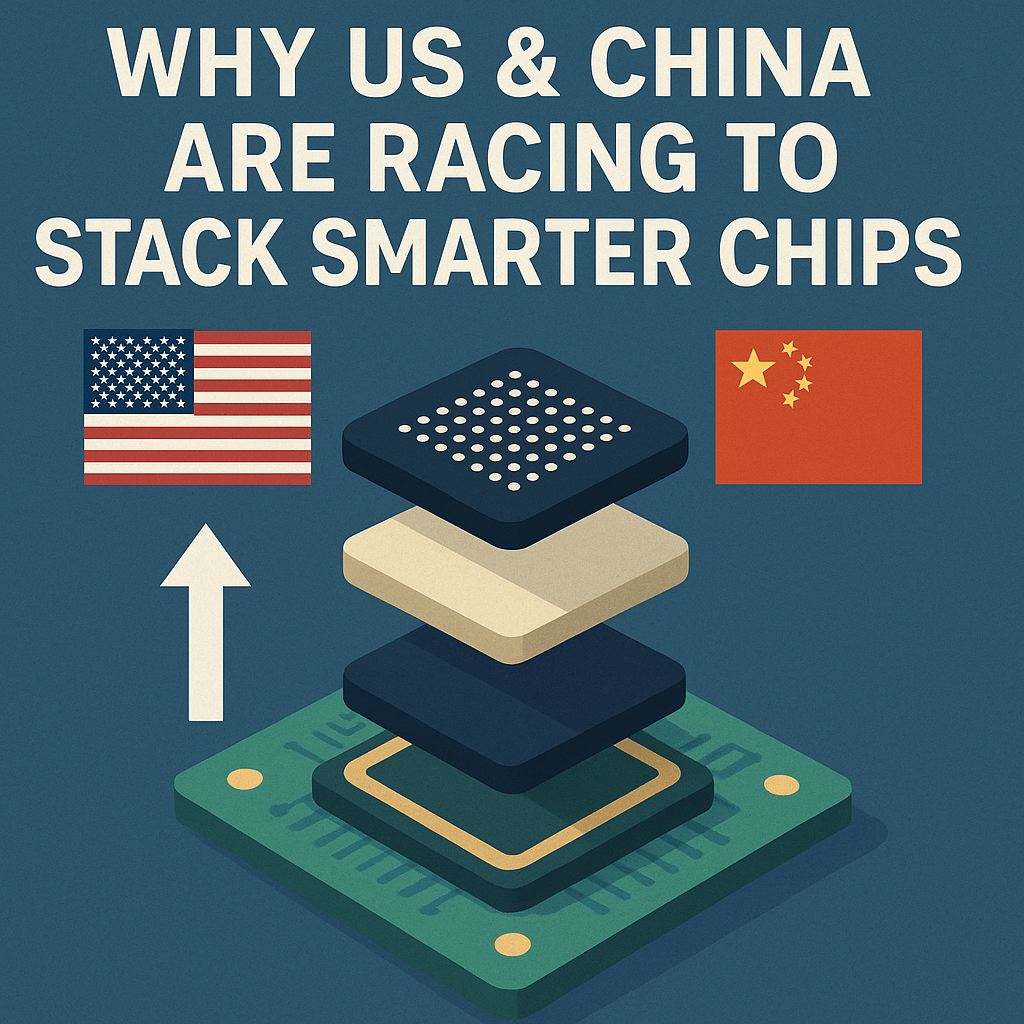
This article explains a high-tech method called advanced chip packaging, used to glue together multiple tiny computer chips—like processors and memory—onto a shared platform. It’s a trick to boost power without making chips too small.
Why It Matters to Everyday People
Powers the AI behind chatbots, voice assistants, and smart gadgets.
Helps miniaturize tech—faster phones, smarter devices.
It’s a behind-the-scenes battle: US, China, Taiwan, and others are investing heavily to gain advantage in AI tech.
What You Should Take Away
Advanced packaging is a key piece in the global tech puzzle—without it, AI power stalls.
The US is trying to build these packaging plants at home, while China isn’t standing still.
Tech continuity depends on where these stacks are made—not just the chips themselves.
Jargon to Know
Advanced Packaging: Think of it as a Tetris—tiny chips locked together for speed.
CoWoS (Chip-on-Wafer-on-Substrate): A fancy base for stacking chips side-by-side. It’s like stacking layers of pancakes with syrup (electrical connections) between them.
Key Learnings
Chip makers used to shrink chips to go faster. Now that’s getting too hard.
So instead, they stack chips like building blocks—same speed boost, less shrink.
It’s complex and costly, but necessary for AI and future tech to keep advancing.
Questions?
Feel free to drop any questions or missed information that may help digest such topics!


Leave a Reply