

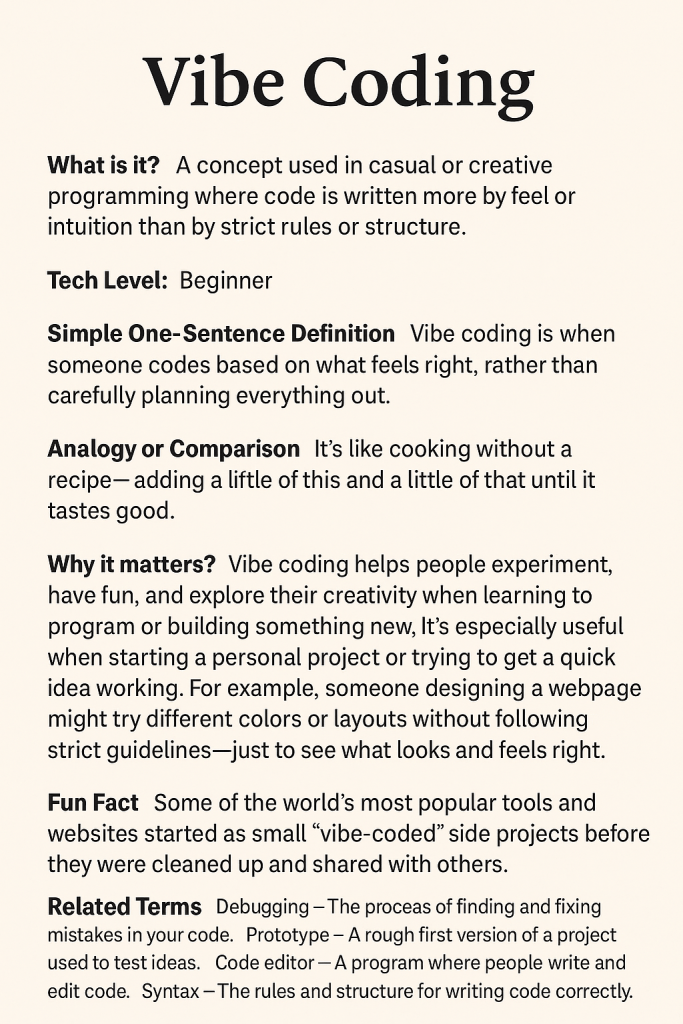
What is it?
A concept used in casual or creative programming where code is written more by feel or intuition than by strict rules or structure.
Tech Understandability: Beginner
Simple One-Sentence Definition:
Vibe coding is when someone codes based on what feels right, rather than carefully planning everything out.
Analogy or Comparison
It’s like cooking without a recipe—adding a little of this and a little of that until it tastes good.
Why it matters?
Vibe coding helps people experiment, have fun, and explore their creativity when learning to program or building something new. It’s especially useful when starting a personal project or trying to get a quick idea working. For example, someone designing a webpage might try different colors or layouts without following strict guidelines—just to see what looks and feels right. It lowers the pressure to be perfect and encourages exploration, especially when you’re just getting started with coding.
Fun Fact
Some of the world’s most popular tools and websites started as small “vibe-coded” side projects before they were cleaned up and shared with others.
Actual examples:
1. Twitter
Originally created during a daylong brainstorming session at a podcasting company called Odeo, Twitter started as a quick, internal messaging idea. Jack Dorsey and others just wanted a way to post status updates for their team—no formal product plan.
2. Craigslist
Craig Newmark started it as a simple email list to share local events with friends. He wasn’t trying to build a business or product—just “vibing” with what people needed.
3. GitHub
The first version was built in a weekend by developers who wanted an easier way to share and collaborate on code. The early version was hacked together using Ruby on Rails and wasn’t meant to be a company.
4. Facebook
Initially created by Mark Zuckerberg in his Harvard dorm room as “TheFacebook,” it was meant to be a fun, simple tool for students to connect—not a billion-dollar company.
5. Flappy Bird
Made by Vietnamese developer Dong Nguyen in just a few days, this simple game exploded in popularity through pure user obsession—not because of a marketing plan or formal release.
Related Terms
Prototype – A rough first version of a project used to test ideas.
Printout
 Tech Teacher
Leave a comment