
By Devonte Longmire
What is it?
Phishing is a concept and a common cyber scam used to trick people into giving away personal information, like passwords or credit card numbers, by pretending to be a trusted source.
Tech understandabiliy: Beginner
Simple One-Sentence Definition
Phishing is when someone tries to fool you into handing over private information by pretending to be someone they’re not.
Analogy or Comparison that makes the concept relatable
It’s like getting a fake letter that looks like it’s from your bank, asking you to send your PIN number—but it’s actually from a scammer who made the letter look real.
Why it matters?
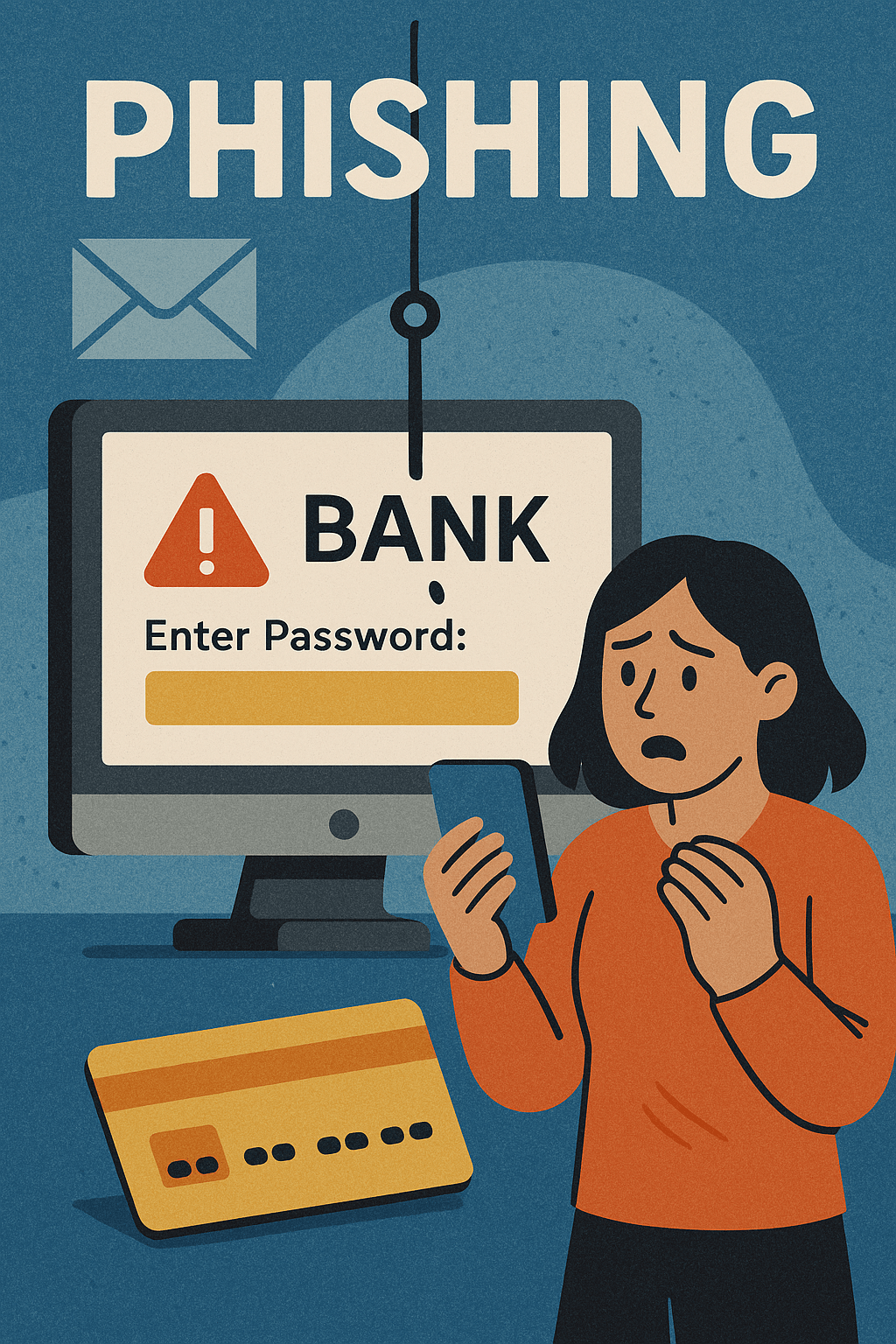
Phishing can happen through email, text messages, or fake websites. For example, you might get a message that looks like it’s from your bank saying there’s a problem with your account, urging you to click a link and enter your password. But if you do, scammers now have access to your real account. These attacks are common and can lead to stolen money, identity theft, or even locked devices. Being able to recognize suspicious messages helps keep your personal information safe.
Fun Fact
The term “phishing” comes from “fishing,” because scammers are casting out bait (fake messages) hoping someone bites (falls for the trick).
Related Terms
Spoofing – Faking the identity of a trusted source, like using a bank’s logo in an email.
Malware – Harmful software that can steal data or damage your device, sometimes sent through phishing links.
Two-Factor Authentication (2FA) – An extra security step that helps protect you even if someone gets your password.
Scam Link – A clickable link that leads to a fake or dangerous site meant to trick you.
Social Engineering – A trick that plays on your emotions to make you act quickly, like scaring you into clicking a fake warning.
Printout
 Tech Teacher
Leave a comment